
Table of Contents
Every day, you make dozens of decisions without even realizing it. Some are as simple as choosing what to eat for breakfast, while others can completely reshape your future, like changing careers, starting a business, or investing your savings.
The truth is simple yet powerful:
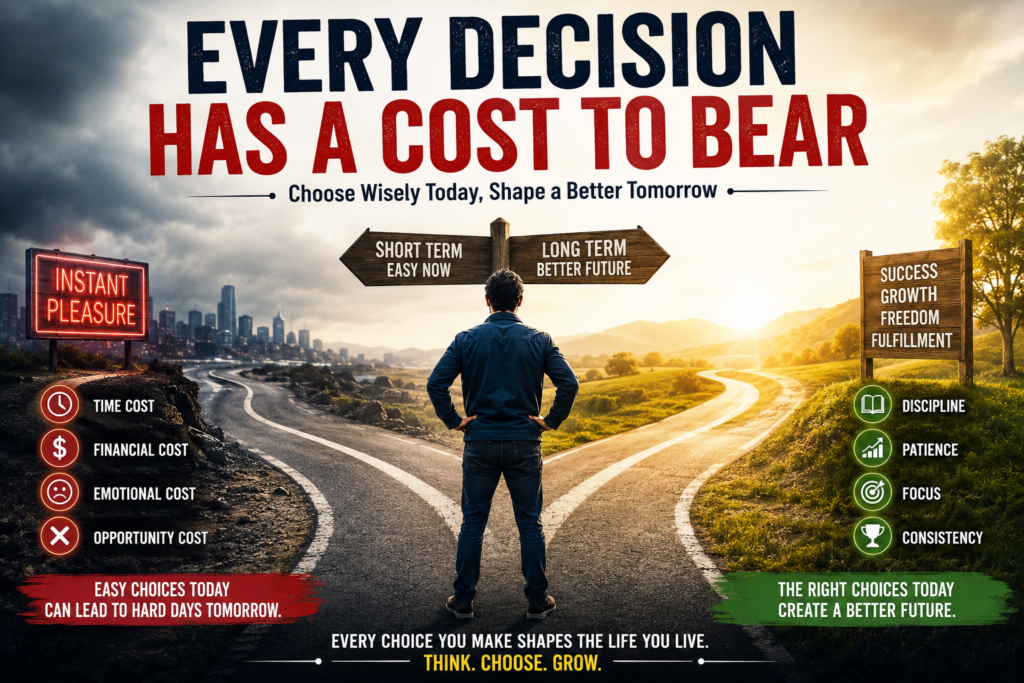
Every Decision has a Cost to Bear. Every choice comes with consequences, sacrifices, and opportunities. Whether the outcome is positive or negative depends on how thoughtfully the decision is made.
Understanding this principle can help you make smarter financial choices, healthier lifestyle decisions, stronger relationships, and more successful career moves.
What Does “Every Decision Has a Cost to Bear” Mean?
Every Decision has a Cost to Bear means that every choice requires giving up something else. Even choosing to do nothing is a decision with consequences.
The cost isn’t always money.
Sometimes it’s:
- Time
- Energy
- Missed opportunities
- Relationships
- Mental peace
- Future growth
Every decision creates a ripple effect that influences tomorrow.
Why Every Decision Comes with a Price
Many people only think about the immediate reward while ignoring the hidden costs.
Let’s explore the four major costs behind every decision.
1. Time Cost
Time is your most valuable asset because it can never be recovered.
For example:
Watching Netflix for five hours may cost you:
- Study time
- Exercise
- Family moments
- Career advancement
Every hour spent somewhere is an hour unavailable elsewhere.
2. Financial Cost
Money decisions often have long-term consequences.
Buying a luxury car may provide excitement today but could reduce your ability to:
- Save for retirement
- Invest
- Buy a home
- Handle emergencies
Smart financial decisions focus on long-term value instead of short-term pleasure.
3. Emotional Cost
Some decisions affect your emotional well-being.
Examples include:
- Staying in a toxic relationship
- Working in a stressful job
- Ignoring mental health
- Avoiding difficult conversations
The emotional cost may remain hidden for years before becoming obvious.
4. Opportunity Cost
Opportunity cost is what you give up when choosing one option over another.
Imagine receiving two job offers.
Choosing Company A means giving up the opportunities available at Company B.
Neither decision is free.
Every choice closes one door while opening another.
How Good Decisions Shape Your Future
Successful people rarely make perfect decisions.
Instead, they consistently make informed decisions.
Good choices gradually create:
- Better health
- Financial stability
- Stronger relationships
- Career growth
- Increased confidence
- Personal freedom
Small daily decisions eventually become lifelong habits.
Step-by-Step Framework for Better Decision-Making
Instead of making emotional choices, follow this practical framework.
Step 1: Define Your Goal
Ask yourself:
“What am I trying to achieve?”
Without a clear goal, it’s impossible to evaluate whether a decision is good or bad.
Step 2: Evaluate the Costs
Consider every possible cost.
Ask:
- How much money will this require?
- How much time will it consume?
- Will it increase stress?
- What opportunities will I lose?
Thinking beyond the obvious prevents costly mistakes.
Step 3: Think Long-Term
Many poor decisions feel rewarding today.
Great decisions often pay off months or years later.
Examples include:
- Saving instead of spending (avoiding Impulse Buying)
- Exercising instead of sleeping in
- Learning new skills instead of scrolling social media
Future rewards usually require present sacrifices.
Step 4: Compare Alternatives
Rarely is there only one option.
List several alternatives.
Compare:
- Benefits
- Risks
- Costs
- Long-term outcomes
This simple habit dramatically improves decision quality.
Step 5: Accept Responsibility
Once you’ve made a thoughtful decision, own it.
Blaming others prevents growth.
Responsible people learn from every outcome.
Even unsuccessful decisions become valuable lessons.
Real-Life Examples
Personal Life
Choosing healthy meals today may cost convenience, but it often leads to better energy, improved health, and lower medical expenses in the future.
Career
Learning a new skill after work requires discipline.
The cost is free time.
The reward may be a promotion or a higher-paying job.
Business
Launching a startup often requires:
- Financial investment
- Long working hours
- Personal sacrifices
Yet successful businesses can create lasting wealth and freedom.
Health
Skipping exercise saves one hour today.
Years later, the hidden cost may include:
- Weight gain
- Reduced energy
- Chronic illness
- Higher healthcare expenses
Healthy habits are investments, not expenses.
Comparison Table: Smart Decisions vs Poor Decisions
| Smart Decisions | Poor Decisions |
|---|---|
| Focus on long-term value | Focus only on instant gratification |
| Consider hidden costs | Ignore future consequences |
| Research before acting | Make emotional decisions |
| Save before spending | Spend before planning |
| Learn from mistakes | Repeat the same mistakes |
| Accept responsibility | Blame circumstances |
Why People Make Costly Decisions
Several psychological factors influence poor decision-making.
These include:
- Fear of missing out (FOMO)
- Emotional impulses
- Peer pressure
- Lack of planning
- Overconfidence
- Procrastination
- Short-term thinking
Recognizing these patterns helps you make wiser choices.
How to Make Better Decisions Every Day
Developing strong decision-making skills is a lifelong process.
Helpful habits include:
- Pause before making important choices.
- Gather enough information.
- Consider the long-term impact.
- Seek advice from experienced people.
- Learn from previous mistakes.
- Avoid making major decisions under stress or anger.
- Focus on values instead of emotions.
Small improvements in decision-making can produce remarkable results over time.
Final Thoughts
Life is built one decision at a time.
Whether you’re choosing a career, managing your finances, improving your health, or strengthening relationships, remember this timeless truth:
Every Decision has a Cost to Bear.
The question isn’t whether you’ll pay a price.
The real question is whether you’re willing to pay today’s small price for tomorrow’s bigger reward.
Thoughtful decisions don’t eliminate costs—they ensure you’re paying for something worthwhile.
4. Key Takeaways
- Every decision involves a cost, even choosing not to act.
- Costs include time, money, emotions, and missed opportunities.
- Opportunity cost is often the most overlooked consequence.
- Long-term thinking leads to better outcomes than chasing instant rewards.
- Evaluating alternatives improves decision quality.
- Accepting responsibility accelerates personal growth.
- Small daily decisions shape your future over time.
5. Expert Tips
- Write down the pros and cons before making major decisions.
- Wait 24 hours before making emotional purchases.
- Think in terms of five-year outcomes rather than five-day rewards.
- Invest in skills that increase your earning potential.
- Prioritize decisions that align with your values.
- Learn from successful people, but make decisions based on your own goals.
- Review important decisions regularly to refine your judgment.
6. Common Mistakes
Avoid these decision-making traps:
- Acting on impulse
- Ignoring hidden costs
- Focusing only on short-term rewards
- Letting fear control your choices
- Following the crowd without critical thinking
- Refusing to admit mistakes
- Delaying important decisions indefinitely
- Failing to consider opportunity cost
7. Frequently Asked Questions (FAQs)
1. What does “Every Decision has a Cost to Bear” mean?
It means every choice involves a trade-off, whether it’s time, money, effort, or missed opportunities.
2. Why is opportunity cost important?
It helps you understand what you’re giving up when choosing one option over another.
3. Can avoiding a decision also have a cost?
Yes. Delaying or avoiding decisions can lead to missed opportunities and additional problems.
4. How can I improve my decision-making?
Set clear goals, evaluate consequences, compare options, and think long term.
5. Why do emotions lead to poor decisions?
Strong emotions can reduce logical thinking and increase impulsive behavior.
6. Are all costly decisions bad?
No. Many worthwhile decisions require short-term sacrifices for long-term benefits.
7. How does decision-making affect success?
Consistently making informed decisions improves financial stability, health, relationships, and career growth.
8. What is the biggest hidden cost of poor decisions?
Lost opportunities that could have created better outcomes.
9. Can small decisions really impact the future?
Yes. Small daily choices compound over time and significantly influence your life.
10. What’s the first step before making an important decision?
Clearly define your goal and understand what you want to achieve.