
Table of Contents
Self-discipline often feels like a rare superpower reserved for elite athletes, top CEOs, or hyper-productive creatives. Most people rely on sporadic bursts of inspiration to tackle their biggest goals, only to abandon them when enthusiasm fades. Building true discipline does not require superhuman willpower—it requires building smart, repeatable systems that keep you moving forward even when you do not feel like it.
What Is Self-Discipline?
Self-discipline definition: Self-discipline is the ability to push yourself forward, stay focused, and take action regardless of your emotional state. It involves choosing long-term goals over immediate gratification, regulating your behavior, and maintaining consistency in habit execution.
Why Self-Discipline Matters More Than Motivation
Motivation is an emotion—it comes and goes like the weather. Relying purely on motivation to finish a project, go to the gym, or save money leaves your productivity at the mercy of how you feel each morning.
Self-discipline acts as your operational bridge between setting an intention and reaching an outcome. When motivation wanes, discipline ensures you execute your planned routines regardless of mood. Research in cognitive psychology shows that high self-discipline predicts career success, academic achievement, and mental well-being far better than IQ scores alone.
The Psychology of Self-Control
Your brain evaluates every choice through a balance between the prefrontal cortex (responsible for logical planning and decision-making) and the limbic system (driven by immediate rewards and emotional desires).
Willpower functions much like a muscle—it fatigues after heavy cognitive exertion. If you spend your entire day resisting small temptations, your brain experiences decision fatigue, making you more likely to surrender to distractions by evening. Mastering self-control is less about fighting your impulses and more about structuring your daily environment so you spend less mental energy fighting those battles.
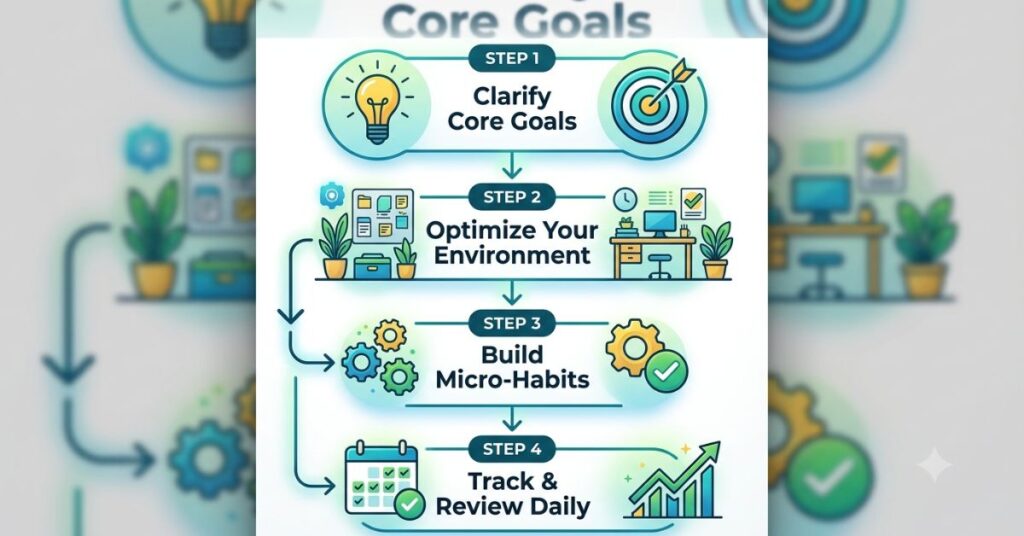
5 Proven Steps on How to Improve Your Self-Discipline
Building self-discipline is a skill developed through consistent, daily practice. Use these five actionable steps to build sustainable habits.
Step 1: Clarify Your Core Motivations and Goals
Vague intentions lead to weak discipline. Saying “I want to get fit” provides insufficient mental clarity when temptation strikes.
- Define the concrete outcome: Target specific deliverables (e.g., “I will run 3 miles, 3 days a week”).
- Identify your deep ‘Why’: Connect the action to your long-term values. When the purpose is clear, resisting short-term distraction becomes easier.
Step 2: Remove Friction and Tidy Your Environment
Your immediate surroundings dictate your baseline behavior. Redesigning your space minimizes reliance on raw willpower.
- Increase friction for bad habits: Put your phone in another room while working, or remove junk food from your kitchen cabinets.
- Decrease friction for good habits: Lay out your workout clothes the night before, or open your work document before taking a break.
Step 3: Implement Strategic Micro-Habits
Attempting a complete lifestyle overhaul overnight often triggers burnout. Instead, start small to build momentum.
- Use the Two-Minute Rule: Scale down new habits into actions that take less than two minutes (e.g., read one page, do five push-ups).
- Habit Stacking: Attach a new discipline to an existing routine. For example: “After I pour my morning coffee, I will write down my top 3 daily priorities.”
Step 4: Systematize Daily Accountability
Tracking your progress builds visual momentum and reinforces self-identity.
- Maintain a Habit Tracker: Mark an ‘X’ on a calendar for every successful day. Protecting your streak reinforces consistency.
- Partner Up: Share your daily goals with a trusted peer or accountability partner to ensure follow-through.
Step 5: Practice Deliberate Recovery and Self-Compassion
Self-discipline is not self-punishment. Expect occasional slips and plan for effective recovery.
- Avoid the “What the Hell” Effect: A single slip-up should not justify abandoning your plan for the rest of the week. Reframe a setback as data, adjust your approach, and return to your routine immediately.
- Schedule Rest: High focus requires intentional down-time. Ensure adequate sleep, proper nutrition, and active relaxation.
Motivation vs. Self-Discipline: Key Differences
Understanding the operational differences between motivation and self-discipline helps you build more reliable routines.
| Feature | Motivation | Self-Discipline |
| Origin | Emotional & Internal/External Spikes | Habit-Based & Systemic |
| Reliability | Fluctuates constantly | Consistent & Predictable |
| Primary Driver | Feelings of enthusiasm or urgency | Commitment to long-term goals |
| Sustainability | Low (Short-term bursts) | High (Long-term endurance) |
| Required Effort | Feels effortless initially | Requires intentional focus & practice |
Overcoming Common Hurdles in Your Self-Discipline Journey
1. Decision Fatigue
Making dozens of trivial choices throughout the day drains your capacity for self-control.
- Fix: Automate routine choices. Plan your meals on Sunday, establish a uniform morning routine, and schedule specific time slots for checking email.
2. Perfectionism
Waiting for ideal conditions often leads to procrastination.
- Fix: Prioritize completion over perfection. Executing a mediocre workout is far better than skipping it entirely.
Key Takeaways
- Willpower is a finite resource: Optimize your environment so you do not rely solely on raw self-control.
- Systems beat motivation: Build routines, schedules, and environmental triggers that automate good choices.
- Start small: Focus on micro-habits to build momentum without triggering cognitive overload.
- Practice forgiveness: Rebound quickly from setbacks instead of letting a single failure ruin your momentum.
- Track your progress: Visual tracking builds momentum and reinforces your commitment to growth.
Expert Tips
- Conduct a Daily Time Audit: Track your activities in 30-minute blocks for 3 days to pinpoint time-wasters.
- Apply the 10-Minute Rule: When feeling unmotivated, commit to working on a task for just 10 minutes. Once you start, momentum usually carries you forward.
- Control Your Dopamine Baseline: Limit high-dopamine distractions (social media, mobile games) early in the day so deep focus work feels engaging.
- Use Implementation Intentions: Structure your plans using clear If/Then statements (e.g., “If it is 5:00 PM, then I will close my laptop and go for a walk”).
Common Mistakes to Avoid
- Overcommitting Too Soon: Trying to change five habits simultaneously leads to cognitive burnout. Focus on one major habit at a time.
- Relying on Feelings to Take Action: Waiting to “feel ready” is a trap. Action creates momentum, not the other way around.
- Neglecting Physical Recovery: Skimping on sleep severely weakens prefrontal cortex function, reducing self-control.
- Failing to Measure Progress: Without tracking metrics, it is impossible to evaluate growth or spot points of friction.
Click here to read The science of motivation
Frequently Asked Questions
What is the fastest way to build self-discipline?
The fastest approach is starting with one tiny micro-habit while eliminating environmental distractions that siphon your focus.
How long does it take to develop strong self-discipline?
Research indicates it takes between 21 to 66 days to form a new habit, depending on task complexity and consistency.
Can self-discipline be learned, or is it genetic?
Self-discipline is a learned skill. While temperament plays a minor baseline role, self-control can be strengthened through practice.
Why do I lose self-discipline at night?
Mental exertion throughout the day causes decision fatigue, making your brain favor low-effort, high-dopamine activities by evening.
How does self-discipline affect mental health?
High self-discipline reduces chronic stress, boosts self-esteem, and prevents the anxiety associated with chronic procrastination.
What should I do when I lose my discipline streak?
Acknowledge the slip without self-judgment, analyze what caused the distraction, and resume your routine immediately on the next scheduled instance.
Is self-discipline the same as self-control?
Self-control is the immediate capacity to resist impulses, whereas self-discipline is the sustained ability to align long-term actions with your goals.
How do I maintain discipline when working from home?
Establish clear boundaries between work and personal spaces, stick to fixed start and end times, and remove non-work distractions from your workspace.